

Table of Contents
- Why Pergola Freight Costs Run High (and Where the Money Goes)
- How to Compare Freight Quotes Step by Step
- Freight Accessorial Charges That Inflate Your Bill
- Pergola Delivery Options: Curbside, Threshold, and White Glove
- Cutting Costs Through Packaging and Shipment Consolidation
- Your Freight Delivery Checklist Before and After the Truck Arrives
- How Material, Size, and Season Affect Total Project Cost
- Frequently Asked Questions
Last Updated: October 19, 2026
Why Pergola Freight Costs Run High (and Where the Money Goes)
Pergola freight is the shipping charge for moving a large, heavy, oversized kit from the seller to your property, and it usually costs far more than buyers expect.
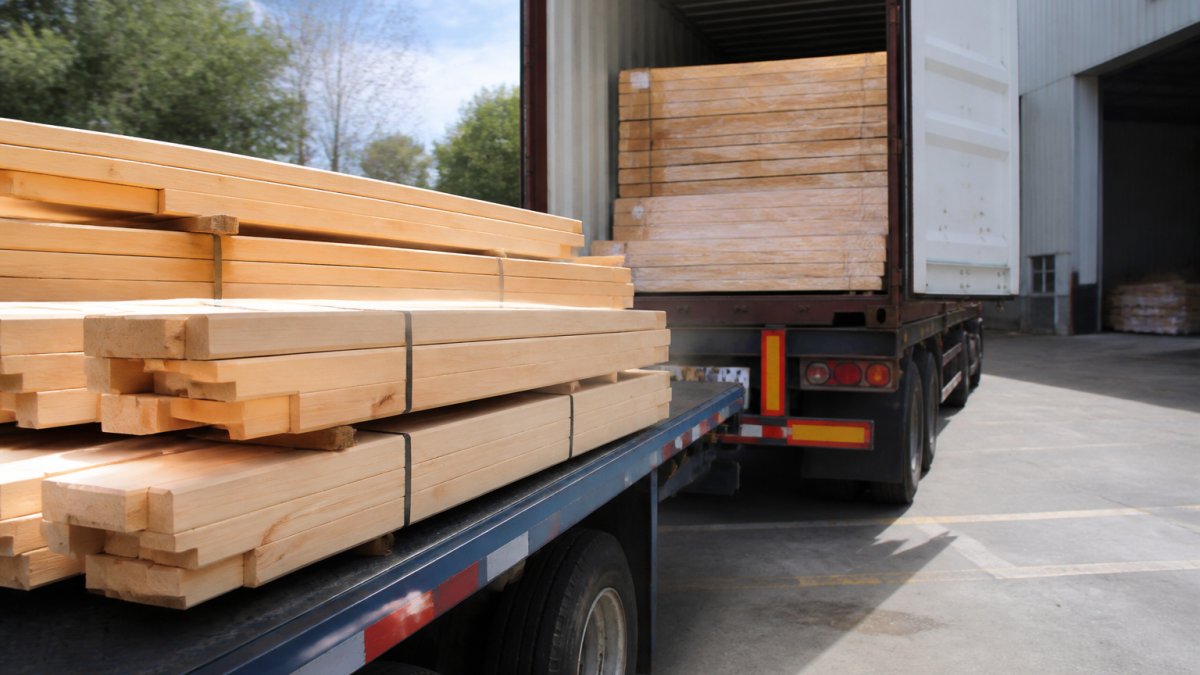
A pergola kit is not a normal parcel. Long cedar beams, bundled hardware, and palletized lumber take up space a standard truck cannot handle.
Here is where the money actually goes:
- Space on the truck. A long bundle takes up room that could hold several smaller shipments.
- Special handling. Heavy goods need equipment and extra hands at pickup and drop-off.
- Delivery conditions. Residential streets, driveways, and tight turns all add cost.
Most buyers ignore freight until the invoice arrives. That is the wrong order: freight is a line item you can plan for, and planning is where savings live.
Dimensional Weight and the Oversized Shipment Problem
Dimensional weight is a pricing method carriers use to charge by the space a package occupies rather than its actual weight. For pergola kits, this single rule drives most of the bill.
Carriers apply dimensional weight to oversized shipments, and a pergola kit almost always qualifies. The formula rewards compact, well-packed loads and punishes loose, airy ones, so packaging decisions matter as much as the carrier you pick.
How to Compare Freight Quotes Step by Step
Comparing freight quotes is the fastest way to cut pergola freight costs, but only if you compare the same things. Most buyers pick the lowest of three numbers, then get surprised by fees added later. Force every quote into the same format before you look at the total.
Build a like-for-like quote sheet
Before you request a quote, open a spreadsheet with one row per carrier or seller and these columns. Fill every cell or mark it “not quoted”, a blank cell is where surprise fees hide.
- Shipment class. Less-than-truckload (LTL) carriers price by freight class, a number from 50 to 500 set by the National Motor Freight Classification (NMFC). Pergola kits usually land in a mid-to-high class because they are bulky and low-density. Ask the seller which class they declared; a lower class on the same load is a real savings.
- Actual weight vs. dimensional weight. Carriers bill on whichever is greater. For a long, light bundle, dimensional weight almost always wins. Ask for both numbers in writing.
- Pallet count and dimensions. A quote for one 12-foot pallet is not comparable to a quote for three 8-foot pallets, even if the total weight matches.
A worked comparison example
Suppose two sellers quote a cedar kit shipping as two pallets, each 12 feet long and 40 inches wide, with a combined actual weight of 850 pounds.
- Seller A quotes $640 freight, curbside, standard transit, fuel surcharge included, no liftgate, no residential fee disclosed.
- Seller B quotes $710 freight, threshold delivery, liftgate included, residential fee itemized at $95, fuel surcharge at 18%.
On the surface Seller A looks cheaper by $70. But add the liftgate Seller A omitted (commonly $75-$150 for a residential drop) and the residential fee, and Seller A’s landed freight is likely higher.
Ask each carrier for a quote using your full delivery address, including whether a commercial truck can reach the drop point and whether a liftgate is required. Address details and access conditions change the rate more than most buyers realize, and a vague quote is a quote you cannot trust.
Questions to ask before you accept any quote
- Which freight class did you declare, and can you show the NMFC item?
- Is the fuel surcharge capped, and what percentage is current?
- Is liftgate included, and is there a residential or limited-access fee?
- What is the declared value and does the quote include full replacement coverage?
- What happens if the shipment is reweighed or reclassified at the terminal?
- Can the shipment be consolidated with another order to earn a better rate?
Get the numbers in writing, put them in the same columns, and the cheapest real option usually becomes obvious.
Freight Accessorial Charges That Inflate Your Bill
Accessorial charges are the add-on fees carriers bill for services beyond basic dock-to-dock transport, the quiet reason a reasonable-looking quote balloons at invoicing. Understanding them is how you stop paying for things you did not need.
The most common add-ons for pergola deliveries:
- Liftgate service. A powered platform lowers your freight to the ground when there is no loading dock.
- Residential delivery. Home addresses cost more than commercial ones because trucks navigate tighter spaces.
- Delivery appointment. Scheduling a specific window adds a fee.
None of these are scams. They reflect real work. The problem is paying for a service you could have avoided with better planning.
Liftgate, Residential, and Appointment Fees Explained
A liftgate is the single most useful add-on for homeowners, because most homes have no loading dock. Without it, you may be asked to unload heavy bundles by hand, which is unsafe and often impossible for a two-person household.
Residential fees apply because home deliveries are slower and riskier for carriers than warehouse drops; appointment fees cover coordinating a set delivery window.
You can reduce these charges by:
- Asking whether a nearby commercial address is an option, if you have one.
- Scheduling delivery for a day you can be home, avoiding reschedule fees.
- Confirming the truck can reach your drop point before it arrives.
Pergola Delivery Options: Curbside, Threshold, and White Glove
Pergola delivery options fall into three tiers, and each changes both the price and the work left on your plate.
| Delivery Option | What You Get | Who Does the Lifting | Best For |
|---|---|---|---|
| Curbside | Freight left at the curb or driveway edge | You and a helper | Strong DIYers with equipment |
| Threshold | Delivered to your door or garage | Carrier moves it close | Most homeowners |
| White glove | Placed where you want, sometimes unpacked | Carrier handles it fully | Buyers who want zero heavy lifting |
Curbside is cheapest and the most work; threshold is the middle ground most homeowners pick; white glove costs the most but removes the physical strain.
The real question is not which is cheapest but which keeps your project moving. If you cannot safely move long bundles, threshold or white glove is money well spent.
Cutting Costs Through Packaging and Shipment Consolidation
Packaging and consolidation are the two levers buyers control most directly, and both can lower pergola freight costs before the truck rolls. Carriers bill on the space your shipment occupies and the number of separate shipments you create: shrink the footprint, combine the loads, and the rate follows.
How packaging changes the freight math
Dimensional weight is calculated from length × width × height divided by a carrier divisor (commonly 139 for domestic ground shipments). A bundle 12 feet long, 40 inches wide, and 30 inches tall yields a dimensional weight far above its actual weight, so the carrier bills that figure. Two changes move the number:
- Shorten the longest dimension where the kit allows. Some sellers offer pre-cut or nested profiles that ship in shorter bundles. A 10-foot bundle instead of a 12-foot bundle can drop the shipment into a lower handling tier.
- Tighten the bundle. Loose, airy packaging inflates the cubic measurement. Ask whether the kit ships in the fewest, tightest bundles possible, with hardware boxed inside the lumber wrap rather than as a separate parcel.
Palletization matters too: a single stable pallet a forklift can move is cheaper to handle than loose bundles requiring manual unloading. Ask the seller how many pallets the kit ships on and whether the dimensions are declared on the quote.
Consolidation: one shipment beats two
Every separate shipment carries its own base freight charge, fuel surcharge, and accessorial fees. Splitting an order to “spread out the cost” usually backfires because the second shipment triggers a new minimum charge and a second liftgate or residential fee.
Consolidation works in two ways:
- Order everything at once. Bundle the kit, hardware, anchors, and any extras into one shipment. A second parcel weeks later can cost more in freight than the hardware itself.
- Ask about consolidation programs. Some sellers combine your order with others heading the same direction to earn a better per-unit rate. This is most common with direct-to-consumer sellers who ship regularly to your region.
Splitting an order to “spread out the cost” usually backfires. Each separate shipment carries its own base freight charge and accessorial fees, so two deliveries often cost more than one consolidated load. Confirm the pallet count and bundle dimensions in writing before you approve the quote.
Timing and season
Freight rates move with demand and truck capacity. Peak building months bring tighter capacity and higher rates; ordering in a quieter month often lands a better quote and faster scheduling. If your schedule allows, ask whether a short delay moves your shipment into a lower-demand window. A common mistake is ordering hardware separately weeks later, that second shipment carries its own freight minimum.
Your Freight Delivery Checklist Before and After the Truck Arrives
A freight delivery checklist turns a stressful drop-off into a routine one: confirm access, protect your shipment, and document everything before the driver leaves.
Before delivery:
- Confirm the truck can reach your drop point and turn around.
- Clear the driveway and mark where you want the freight placed.
- Have a helper and a hand truck ready for curbside or threshold delivery.
When the truck arrives:
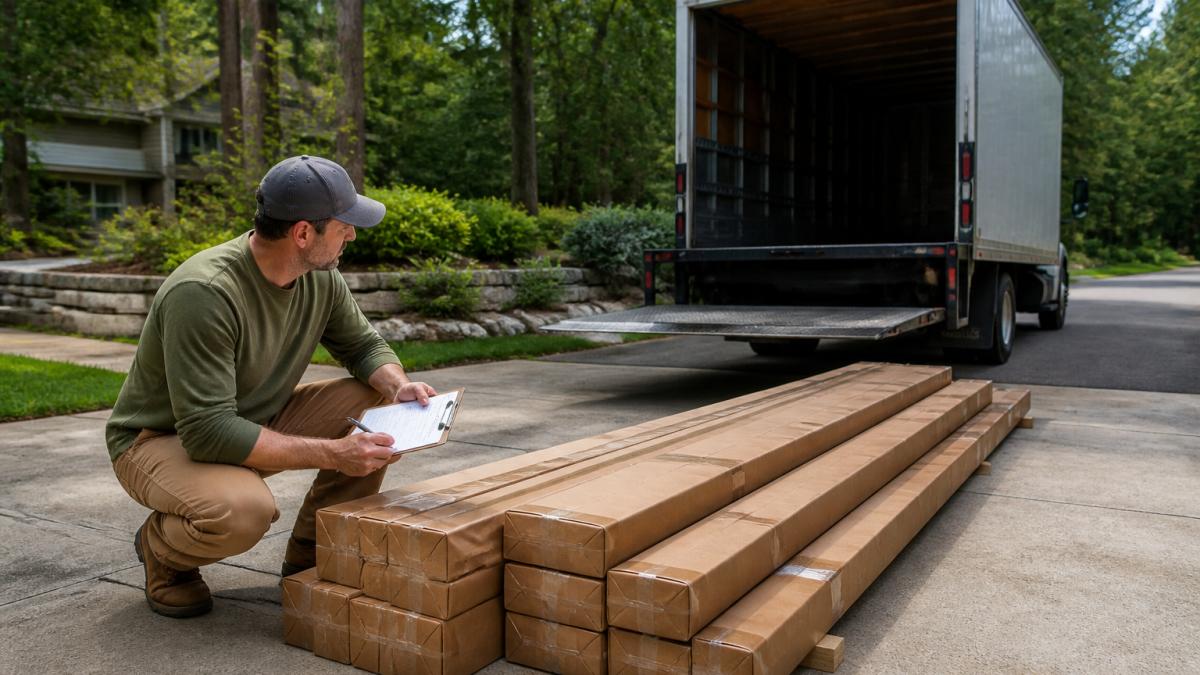
- Count every bundle against the delivery paperwork.
- Look for crushed corners, tears, and water damage.
- Photograph any damage before signing.
After delivery:
- Store lumber flat and off the ground.
- Report any concealed damage right away.
- Keep all packaging until the build is done.
Signing a clean receipt without inspecting is the most common and most costly mistake. Once you sign, damage claims get much harder.
How Material, Size, and Season Affect Total Project Cost
Total project cost is kit price plus freight plus labor plus site prep, and each factor moves the freight portion too.
Our advice: price the whole project, not the kit alone. Ask for a freight quote alongside the kit price, and plan the order for a quieter month when your schedule allows.
Freight is the part of a pergola project most buyers underestimate, and it is also the part you can control with a little planning.
Frequently Asked Questions
How can I reduce freight costs when ordering a pergola kit?
Start by comparing at least three freight quotes on the same shipment details: dimensions, weight, delivery address, and accessorial needs. Ask about shipment consolidation if you are ordering hardware or additional lumber. Choose curbside delivery instead of white glove when you can unload yourself, and schedule during off-season when carrier capacity is looser. Confirm the carrier is quoting dimensional weight, not just scale weight, so the numbers are comparable. Small planning decisions often matter more than haggling on rate.
What factors affect the shipping cost of a pergola?
Pergola freight pricing depends on dimensional weight (length matters most for long beams), distance from the shipper, residential versus commercial delivery, liftgate needs, appointment scheduling, and season. A cedar pergola kit with long posts can be billed at a much higher dimensional weight than its actual scale weight. Accessorial charges like residential delivery and liftgate service add to the base rate. Consolidating multiple items into one pallet and choosing a flexible delivery window are the two easiest levers most buyers have.
How do I compare freight quotes for oversized building materials?
Request quotes using identical inputs: exact crate dimensions, total weight, delivery ZIP code, and a list of accessorial services you need. Ask each carrier to itemize base rate, fuel surcharge, and accessorials so you can see the real total. Confirm whether the quote includes liftgate, residential delivery, and appointment scheduling, or whether those are add-ons. Check the delivery window and claims process too, since a cheap quote with a slow claims process can cost more in the end.
What should I check before accepting a freight delivery?
Walk the pallet before signing. Count packages against the bill of lading, look for crushed corners, tears, or water damage, and photograph anything suspicious. Note damage on the delivery receipt before you sign, not after. If a package is missing or clearly damaged, ask the driver to note it and keep a copy. Move the shipment indoors or under cover promptly since cedar and Douglas fir can absorb moisture. Keep all packaging until you have inspected every piece.
