

Table of Contents
- Why Preventing Pergola Rot and Rust Starts With a Diagnostic Inspection
- How to Prevent Wood Rot on a Pergola: Moisture Control and Material Choices
- How to Prevent Rust on Pergola Hardware: Fasteners, Coatings, and Dissimilar Metals
- How Often to Stain or Seal a Pergola: Schedules by Climate and Exposure
- Repairing and Replacing Damaged Wood and Metal Components
- Your Pergola Maintenance Checklist: Seasonal and Annual Tasks
- Conclusion
- Frequently Asked Questions
Last Updated: October 16, 2026
Why Preventing Pergola Rot and Rust Starts With a Diagnostic Inspection
Preventing pergola rot and rust starts with a simple habit: inspect before damage spreads. Ten minutes of checking saves thousands in repairs.
Wood rot is the breakdown of wood fibers by fungi feeding on damp timber. Rust is iron or steel corrosion when moisture and oxygen reach bare metal.
Surface rust looks like orange dust and wipes away. Structural corrosion pits, flakes, or eats into bolt heads.
Distinguishing Surface Rust, Structural Corrosion, and Wood Rot
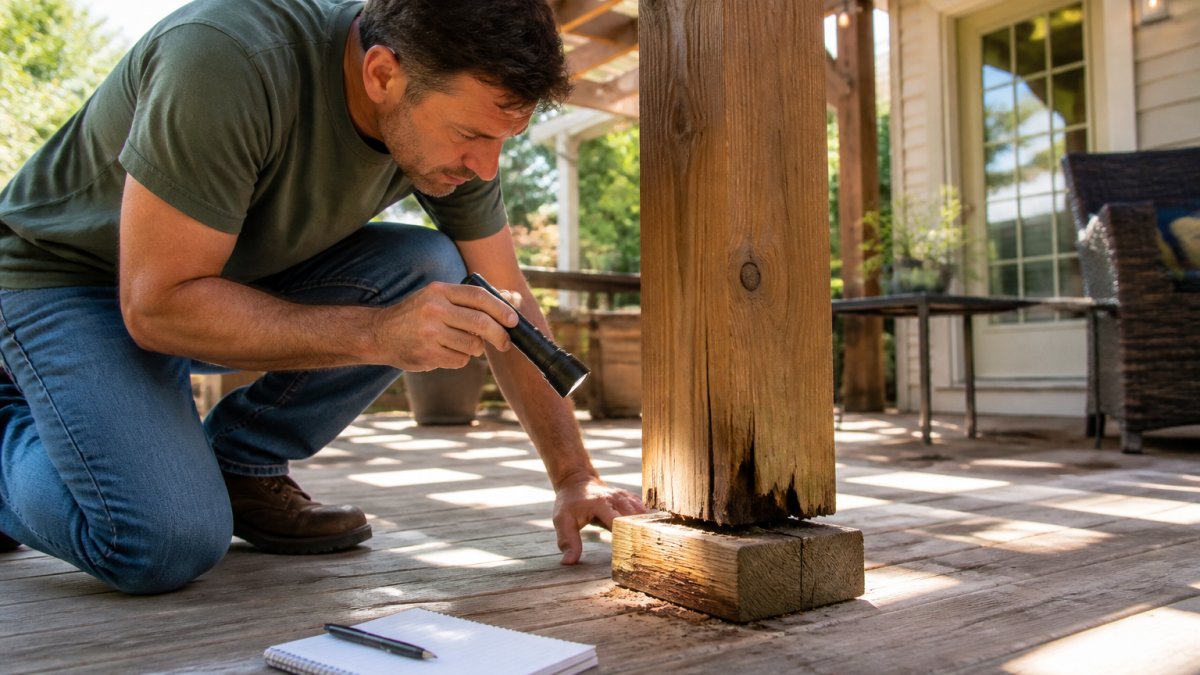
Use this diagnostic checklist before you buy anything:
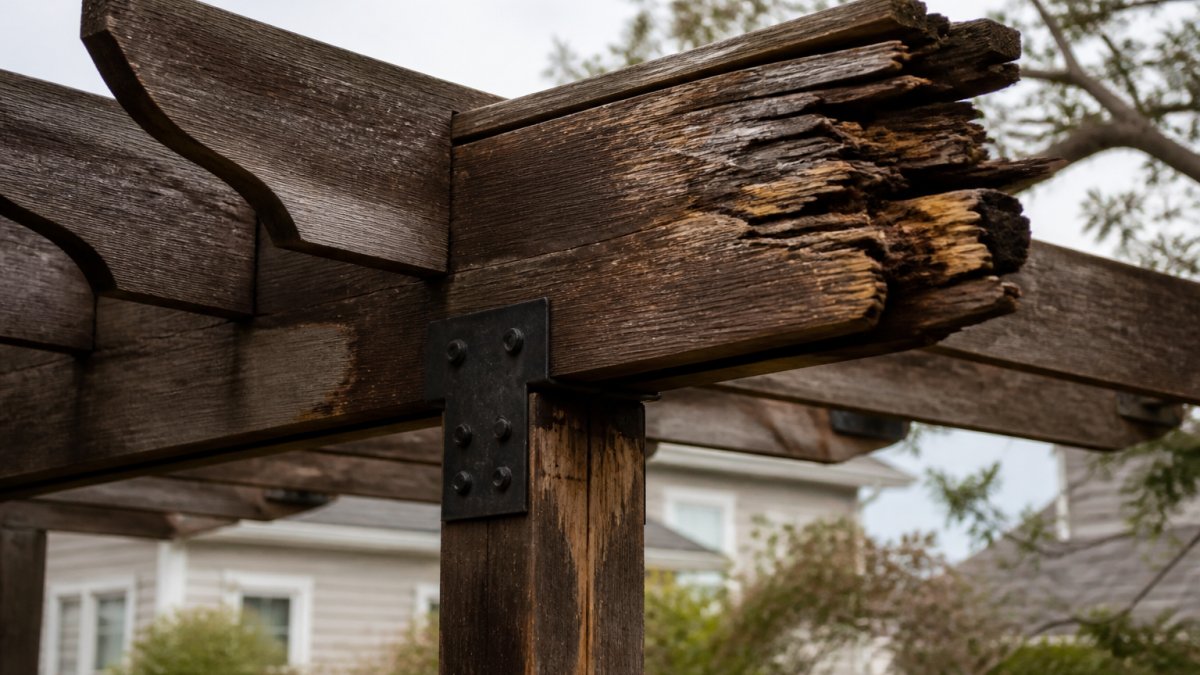
- Probe post bases and beam ends with a screwdriver. Soft or crumbly wood means rot.
- Check bolt heads and brackets for orange dust. That is surface rust.
- Look for pitting, flaking, or thinning metal. That is structural corrosion.
The USDA Forest Service wood decay guidance explains that decay fungi need moisture above the fiber saturation point, which is why water management beats chemical fixes every time.
Ignoring a soft post base is a common and expensive mistake. A rotted base spreads upward through the post, and the whole column has to come out. Catch it early and you replace a base plate instead of a post.
How to Prevent Wood Rot on a Pergola: Moisture Control and Material Choices
Wood rot prevention comes down to one rule: keep wood dry and let it breathe. Cedar and Douglas fir resist decay better than most softwoods because their natural oils and tight grain slow moisture absorption.
Fast drainage matters more than any coating. Water sitting on flat surfaces, in joints, or at the ground line does the damage. Slope every horizontal surface slightly, and never let wood touch soil directly.
Airflow is the other half. Open rafters dry fast after rain; a structure boxed in by vines, fences, or dense shrubs stays damp for days.
Wood-to-Ground and Post-Base Moisture Management
The ground connection is where most rot begins. Concrete footings isolate wood from soil, and metal post bases lift timber above the concrete surface so the post dries on all sides.
If posts sit directly in soil or on a flat concrete pad, water wicks upward. Fix it with a standoff base that raises the wood at least an inch off the surface.
- Set posts on concrete footings, never buried directly in soil
- Use standoff post bases to create an air gap
- Slope the concrete away from the post so water runs off
How to Prevent Rust on Pergola Hardware: Fasteners, Coatings, and Dissimilar Metals
Rust prevention on pergola hardware starts with material choice. Iron and steel corrode when moisture and oxygen reach bare metal; iron oxide flakes off and exposes fresh metal, so corrosion accelerates once it starts. Coatings block that contact; alloys resist it at the molecular level.
Here is how the common hardware options compare for outdoor exposure:
- Hot-dip galvanized steel, a thick zinc coating that sacrifices itself to protect the steel beneath. Good for decades in most climates, but the coating can chip at cut edges and bolt threads.
- Stainless steel (grades 304 and 316), 316 adds molybdenum for salt-air and coastal resistance; 304 is fine inland. Neither rusts in normal rain exposure, but both can stain if embedded iron particles settle on the surface.
- Zinc-plated (electroplated) steel, a thin coating measured in microns. Fine indoors, but it typically shows red rust within one to three seasons outdoors in wet or coastal conditions.
Hardware is a critical component on any pergola. We stock Simpson Strong-Tie and OZCO hardware because their coatings and alloys are built for outdoor exposure.
Preventing Corrosion at Fasteners and Dissimilar-Metal Connections
Dissimilar metals create galvanic corrosion. When two different metals touch with moisture and an electrolyte (rain, salt spray, humid air), one becomes the anode and sacrifices itself. Aluminum brackets bolted with plain steel screws are a classic failure: the aluminum pits and the screw head corrodes from the inside out.
The fix is simple:
- Use stainless steel fasteners with stainless or aluminum brackets
- Add a non-conductive nylon or neoprene washer between dissimilar metals
- Choose one metal family for the whole structure when you can
The American Galvanizers Association corrosion guide notes that separating dissimilar metals is one of the most effective steps to stop galvanic corrosion in outdoor structures.
A Safe Step-by-Step Rust Repair Workflow
When rust appears, the repair is straightforward if you work in the right order. Skipping a step is why rust returns within a season.
Tools and materials:
- Wire brush (hand or drill-mounted) and 80- to 120-grit sandpaper
- Rust-inhibiting primer (look for a zinc-rich or epoxy formula labeled for exterior metal)
- Outdoor paint or direct-to-metal coating matched to the structure
Procedure:
- Protect yourself first. Rust dust and paint fumes are respiratory irritants, wear safety glasses, gloves, and a respirator before scraping.
- Remove loose rust. Scrape with a wire brush, then sand to bare, sound metal, feathering the edges so the repair blends in.
- Degrease and dry. Wipe with a degreaser and let it dry completely; primer will not bond to oil, dirt, or moisture.
- Prime the bare metal. Apply a thin, even coat of rust-inhibiting primer, following the manufacturer’s recoat window.
- Topcoat. Apply outdoor paint or a direct-to-metal coating in thin coats, two thin coats outlast one thick one.
- Let it cure. Keep water off the repair for the full cure time on the label, often 24 to 72 hours.
Do not paint over active rust. Primer and paint over flaking rust trap moisture underneath and the corrosion continues unseen until the coating blisters and lifts. Remove all loose rust first.
Buy one grade of fastener and stick with it across the whole build. Mixing stainless bolts with galvanized brackets is the fastest way to create a corrosion cell you cannot see until the joint fails.
How Often to Stain or Seal a Pergola: Schedules by Climate and Exposure
Most pergolas need sealing every two to three years, but climate changes that number. Coastal air, heavy rain, and full sun shorten the interval; dry, shaded structures stretch it longer.
Use this schedule to plan your maintenance interval:
| Climate / Exposure | Seal or Stain Interval | Watch For |
|---|---|---|
| Dry, low humidity | Every 3 years | Fading color, surface cracks |
| Moderate rain and sun | Every 2 years | Water no longer beads |
| Coastal, salt air | Every 12-18 months | Rust on hardware, gray wood |
| Heavy rain or snow | Every 12-18 months | Soft spots, peeling finish |
| Full sun, high UV | Every 2 years | Graying, checking, splintering |
A quick test tells you when to reseal: drip water on the wood. If it beads up, the finish is working; if it soaks in, clean and reseal.
Repairing and Replacing Damaged Wood and Metal Components
Repair versus replace comes down to how deep the damage goes and how much load the part carries. Surface rust and small rot spots are fixable; structural corrosion and rotted joists are not. Sort damage into three tiers.
A Three-Tier Decision Framework
Tier 1, Cosmetic or surface damage (repair):
- Orange dust or light surface rust that wipes away
- Small rot spots less than an inch deep on a non-structural surface
- Peeling paint or a scratched coating with sound metal underneath
Tier 2, Localized damage (repair with reinforcement):
- Rust pitting that has not thinned the metal more than about a quarter of its original thickness
- Rot confined to a post base or beam end that can be cut back and sistered with new material
- A single corroded bracket or bolt that can be swapped without disturbing the joint
Tier 3, Structural damage (replace):
- A post base is soft more than an inch deep
- A joist or beam end crumbles under light pressure
- A bolt head is pitted or reduced in size
When you swap a part, match the material. A cedar beam wants cedar. A galvanized bracket wants stainless or galvanized fasteners.
Repair Procedures
For surface rust: scrape with a wire brush, smooth with fine-grit sandpaper, wipe the dust away, and coat the bare metal with rust-inhibiting primer. Finish with outdoor paint matched to the structure.
For minor wood rot: dig out all soft material until you hit solid wood, let it dry, then fill with exterior epoxy wood filler. Sand smooth and seal.
For a rotted post base: the most common Tier 2 repair. Cut the post back above the rot, install a new standoff base on the footing, and sister matching lumber to the existing post with through-bolts or structural screws.
Repair-versus-Replace Costs
Costs vary by region, material, and access, but the pattern is consistent: catching damage early is far cheaper than replacing a structural member. Representative ranges:
- A tube of exterior epoxy wood filler: roughly $15-$30
- Rust-inhibiting primer and outdoor paint: roughly $20-$50 per project
- A replacement standoff post base: roughly $15-$60 each
These are planning figures, not quotes. Get local pricing before you commit, and factor in whether the repair is cosmetic or load-bearing. A cosmetic repair takes an afternoon; a structural post replacement is usually a contractor’s job, especially if the footing is compromised.
If you are unsure whether damage is structural, treat it as structural until a professional says otherwise. A pergola carries its own weight plus wind and snow loads, and a compromised post or beam can fail suddenly.
The rule of thumb: if the damage is cosmetic or localized, repair it. If it has reached a load-bearing member or thinned metal significantly, replace it. When in doubt, get an inspection before you spend on either.
Your Pergola Maintenance Checklist: Seasonal and Annual Tasks
A short checklist twice a year prevents almost every rot and rust problem. Print this and keep it with your tools.
Spring:
- Inspect all post bases and ground connections
- Check fasteners for rust and tighten loose bolts
- Clean gutters and downspouts so roof water drains away
Fall:
- Recheck for soft wood before winter moisture
- Test the finish with the water bead test
- Reseal any bare or gray patches
For waterproof roof panels, check seals and flashing each season. Polycarbonate panels and gaskets dry out over time, and a small leak soaks the frame below.
The two habits that matter most are keeping water away from wood and keeping fasteners dry. Everything else on this checklist supports those two goals.
Conclusion
Rot and rust are slow problems, so you have time to catch them before they win. A ten-minute inspection twice a year, a reseal every couple of years, and the right fasteners keep a pergola standing for decades.
At Pergola World, we make that easier with custom-cut cedar and Douglas fir, pre-stained lumber, and hardware from trusted brands like Simpson Strong-Tie and OZCO.
Get a free estimate from Pergola World and build a structure that stands the test of time.
Frequently Asked Questions
How do you know if a pergola post is rotting?
Probe the base of each post with a screwdriver or awl. Healthy wood resists the tip. If it sinks in easily or the wood feels spongy, rot has started. Look for dark discoloration, peeling paint, or a hollow sound when tapped. Check where the post meets concrete or soil, since that is where moisture collects. Catching soft spots early lets you treat or sister the post before the rot spreads to the beam connections above.
What is the best wood for a pergola that resists rot?
Cedar and Douglas fir are popular choices for outdoor structures. Cedar contains natural oils that repel moisture and insects, making it a strong pick for humid climates. Douglas fir is denser and takes stain well, but it needs a weather-resistant sealant applied within weeks of installation. Whichever you choose, keeping end grain sealed and posts off direct ground contact matters more than species alone.
Should pergola hardware be galvanized or stainless steel?
Stainless steel is the better choice for coastal areas or anywhere salt and heavy rain are factors. Galvanized hardware costs less and holds up well inland, but the zinc coating can wear through at contact points over time. If you mix metals, use non-conductive washers between dissimilar materials to slow galvanic corrosion. Check fasteners during your annual inspection and replace any showing white or red rust before it stains the wood.
How often should you seal or stain a wooden pergola?
Most wooden pergolas need a fresh coat of weather-resistant sealant or stain every 2 to 3 years. In high-UV or coastal climates, plan on every 1 to 2 years. Test by sprinkling water on the surface: if it soaks in instead of beading, it is time to reseal. Clean the wood first, let it dry completely, then apply the product in thin, even coats. Sealing on schedule is far cheaper than replacing rotted joists later.
