

Last Updated: October 26, 2026
Quick Summary
Pergola kit cost varies primarily by size and material, with small 8×8 kits at entry-level prices and larger structures costing substantially more. The pergola kit cost typically includes pre-cut lumber, hardware, and fasteners, but you’ll need to budget separately for foundation materials, finishing treatments, and site preparation.
- Small 8×8 to 10×10 pergola kits are entry-level options with limited shade coverage
- Medium 10×12 to 12×16 kits represent the sweet spot for most homeowners balancing cost and functionality
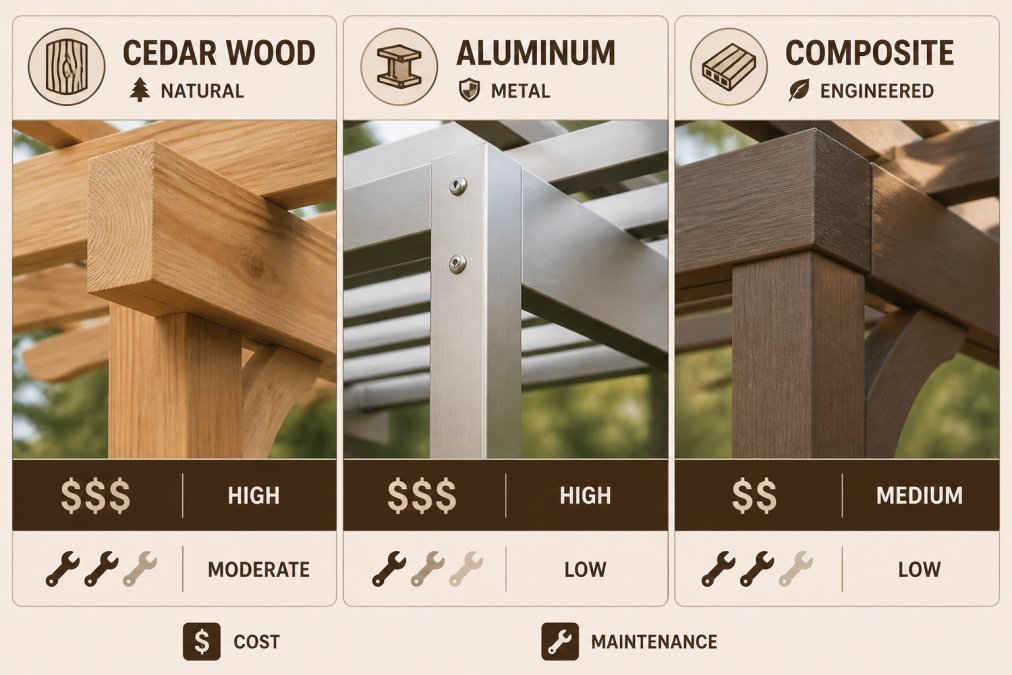
- Cedar requires staining or sealing every two to three years, while aluminum and composite need minimal maintenance
- Shipping costs depend on kit size, weight, and location, sometimes rivaling the kit’s base price
- DIY assembly typically takes one to two days for small kits and five or more days for large structures
Table of Contents
- Understanding Pergola Kit Cost Basics
- Pergola Kit Cost by Size
- How Material Choice Affects Pergola Kit Pricing
- Pergola Kit Installation Cost and Labor
- Pergola Kit Shipping Cost and Hidden Expenses
- Pergola Kit vs. Building from Scratch
- Getting Your Pergola Kit Quote and Next Steps
- Frequently Asked Questions
Understanding Pergola Kit Cost Basics
When you’re budgeting for a pergola kit cost, the first step is understanding what you’re actually paying for. A pergola kit typically includes pre-cut lumber, hardware, fasteners, and assembly instructions, but not everything you need to complete the project.
The difference between a kit’s advertised price and your final spend often comes down to what’s included and what you’ll source separately. Understanding this distinction shapes both your budget and your timeline.
What’s Included in a Typical Pergola Kit
A standard pergola kit includes the structural components: posts, beams, rafters, and the fastening hardware needed to join them. Most kits also provide detailed assembly instructions and a hardware package with bolts, screws, and brackets.
What’s NOT typically included matters just as much. Foundation materials, concrete footings, site preparation, finishing treatments, and specialized tools often fall outside the kit. Neither does the kit usually cover building permits or inspections, which vary by location and local building codes.
What You’ll Need to Buy Separately
Beyond the kit itself, budget for concrete, gravel, or other foundation materials. If your pergola will sit on soil, you’ll need concrete for the post footings. Most homeowners also purchase exterior stain or sealant to protect wood from weathering. Hardware stores sell these separately, and costs add up quickly.
Specialized tools, a power drill, circular saw, level, and measuring tape, may already be in your garage. If not, rental or purchase costs increase your total project expense. Some kits work well with basic hand tools; others require more advanced equipment.
Pergola Kit Cost by Size
Size is the primary cost driver for pergola kits. A small 8-by-8 pergola costs significantly less than a sprawling 16-by-20 structure. Most homeowners find that doubling the footprint roughly triples the materials cost, since both the number of posts and the span of beams increase.
Small Kits (8×8 to 10×10 feet)
Small pergola kits are entry-level options for patios, deck corners, or intimate garden spaces. These compact structures use fewer posts and shorter beams, which keeps material costs lower.
The trade-off is limited shade coverage and weather protection. An 8-by-8 footprint won’t shelter a full outdoor dining set or lounge area. These kits work best as focal points or as covers for smaller seating nooks. Assembly typically takes one to two days for a single person, though having a helper speeds the process considerably.
Medium Kits (10×12 to 12×16 feet)
Medium-sized pergola kits represent the sweet spot for most homeowners. A 10-by-12 pergola provides enough coverage for a dining table and chairs, while remaining manageable for DIY assembly. These kits balance cost, functionality, and aesthetic impact on your outdoor space.
According to HomeGPT’s 2026 pergola pricing analysis, a 10-by-12 cedar pergola averages around a mid-range price point, with most homeowners spending within a moderate budget for this size. Assembly requires two to three days for experienced builders, or three to four days for first-timers.
Large Kits (16×20 feet and Beyond)
Large pergola kits create dramatic outdoor living spaces capable of shading an entire patio or entertainment area. These structures demand more lumber, more hardware, and more structural engineering. The cost increases substantially with each additional foot of span.
A 16-by-20 pergola is often the limit for DIY assembly without professional help. Beyond that size, the weight and complexity make solo assembly risky. Professional installation becomes increasingly attractive as kits grow larger. Assembly time stretches to five days or more, depending on your experience level and site conditions.
How Material Choice Affects Pergola Kit Pricing
The material you choose shapes both the initial cost and the long-term durability of your pergola. Cedar, aluminum, vinyl, and composite each bring different price points and maintenance profiles. Your climate, budget, and aesthetic preferences determine which material makes sense for your project.
Cedar and Wood Pergolas
Cedar is the traditional choice for pergola kits and remains popular for its natural appearance and warmth. Cedar wood resists rot and insects better than most softwoods, which explains its prevalence in outdoor structures.
According to Arrow Outdoor Living’s 2026 pergola cost breakdown, wood pergola kits represent a moderate investment with significant long-term maintenance costs. The initial pergola kit cost is often lower than aluminum or composite alternatives, but ongoing treatment expenses accumulate over time.
Aluminum and Vinyl Pergolas
Aluminum pergolas offer durability with minimal maintenance. They resist rust, rot, and insect damage inherently. Vinyl pergolas sit at a similar maintenance profile, though vinyl can become brittle in extreme cold climates.
These materials suit homeowners who prioritize low maintenance over natural aesthetics. Aluminum pergolas have a modern, sleek appearance that complements contemporary homes. Vinyl offers similar benefits with a slightly warmer appearance than bare aluminum. Neither material requires staining, sealing, or regular painting, a significant advantage for busy homeowners.
Composite Pergolas
Composite pergolas blend wood fibers with plastic, creating a material that mimics wood’s appearance while offering aluminum-like durability. The trade-off is superior longevity: composite resists fading, splintering, and rot while requiring virtually no maintenance.
Composite works well for homeowners who want the aesthetic of wood without the maintenance burden. The material performs especially well in humid or wet climates where wood rot poses a genuine risk. Over a 20-year lifespan, composite often proves cost-effective despite its higher initial pergola kit cost.
Pergola Kit Installation Cost and Labor
Whether you assemble the pergola yourself or hire professionals shapes your total project budget significantly. DIY assembly saves labor costs but demands your time and skill. Professional installation ensures structural integrity but adds substantial expense.
DIY Assembly Time and Difficulty
Most pergola kits are designed for DIY assembly, though difficulty varies. Small kits with straightforward joinery can be completed in a weekend by someone with basic carpentry experience.
The real challenge isn’t usually the assembly itself, it’s site preparation and leveling. Posts must be perfectly vertical and footings properly set, or the entire structure will be unstable and visually off-kilter.
Common assembly mistakes include misaligned posts, insufficient fastening, and improper concrete curing. These errors compound over time as weather stress accumulates.
Professional Installation Pricing
Professional installers handle site prep, foundation work, assembly, and finishing. They bring experience that prevents costly mistakes and ensures your pergola meets local building codes. Professional installation typically adds to your total project cost, but it guarantees structural integrity and often includes a warranty.
Hiring a contractor makes sense if you lack experience, tools, or time. It’s also wise for larger or more complex kits where mistakes carry higher consequences.
Pergola Kit Shipping Cost and Hidden Expenses
Shipping represents a frequently underestimated component of pergola kit cost. Large, heavy structures incur substantial freight charges. Understanding shipping costs before purchase prevents budget surprises and helps you compare total landed costs across vendors.
Freight and Delivery Charges
Pergola kits ship via freight carriers because of their size and weight. Shipping costs depend on the kit’s dimensions, weight, and your location. Rural areas often face higher freight charges than urban centers due to longer delivery distances.
Some vendors include shipping in their quoted price; others add it at checkout. Always clarify whether the pergola kit cost shown includes freight. Comparing total landed cost, kit price plus shipping, across vendors reveals the true expense.
Foundation, Permits, and Site Preparation
Beyond the kit and shipping, site preparation costs often surprise homeowners. Clearing vegetation, leveling ground, and preparing the foundation area requires time and sometimes equipment rental. If your yard slopes significantly or has poor drainage, site work expands considerably.
Building permits vary by location but typically cost between a modest fee and several hundred dollars. Some municipalities require inspections before and after construction. Checking local requirements early prevents delays and ensures your pergola meets code.
Pergola Kit vs. Building from Scratch
Comparing pergola kit cost against building entirely from raw lumber reveals the convenience premium you pay for pre-cut materials. This analysis helps you decide whether a kit or custom build makes sense for your project.
Time and Convenience Advantages
A pergola kit eliminates the design phase and material sourcing. Everything arrives ready to assemble, with instructions and hardware included. This convenience appeals to homeowners who lack carpentry experience or simply want a faster project timeline.
Building from scratch requires designing the structure, calculating material quantities, sourcing individual pieces, and troubleshooting assembly without instructions. This approach suits experienced carpenters or those with specific design requirements that standard kits don’t accommodate. For most homeowners, the convenience of a kit outweighs the marginal cost difference.
Quality and Durability Considerations
Pergola kits from reputable manufacturers use kiln-dried, graded lumber and quality hardware. The materials are selected for outdoor performance, and the design has been tested and refined.
Custom-built pergolas are only as good as the builder’s material choices and construction skill. Sourcing inferior lumber or using inappropriate fasteners creates durability problems.
At Pergola World, we specialize in custom-cut cedar and Douglas fir solutions with optional pre-cut profiles and pre-stained lumber to accelerate your assembly timeline.
Getting Your Pergola Kit Quote and Next Steps
Moving forward with a pergola kit purchase requires gathering quotes, understanding what’s included, and planning your timeline.
Start by measuring your space and determining the pergola size that fits your needs and aesthetic. Consider the material that aligns with your climate, maintenance preferences, and budget.
Before committing, verify that the kit includes everything necessary for assembly. The Pergola Builders Essential Guide walks you through the next steps after selecting your kit, from site preparation through final finishing.
Pergola World’s builder’s guide walks you through the next steps after selecting your kit, from site preparation through final finishing.
Frequently Asked Questions
Is it cheaper to build a pergola or buy a kit?
Pergola kits offer time savings and precision-cut components that reduce assembly errors, but the total cost depends on your labor value and material choices. Building from scratch requires sourcing individual lumber, hardware, and fasteners separately, which often costs more and takes significantly longer. Kits eliminate guesswork and ensure structural integrity, making them worthwhile for most homeowners.
What should I include in my pergola kit cost budget beyond the kit price?
Plan for foundation materials (concrete, footings), permits if required in your area, delivery or freight charges, tools you may not own, and professional installation if you choose not to assemble it yourself. Additional costs can include site preparation, grading, and fasteners or hardware not included in the kit. Shipping costs can be substantial depending on kit size and your location, so factor this into your total project budget.
How much does a 10-by-12 pergola kit typically cost?
The final price depends on material quality, pre-cut options, pre-staining, and whether you hire a professional installer.
How can I reduce pergola kit shipping and freight costs?
Freight charges are typically calculated by weight and distance. Choosing a lighter material like aluminum or vinyl instead of cedar can reduce shipping costs. Ordering during off-season months or bundling your order with other materials may also lower per-unit freight. Ask your supplier about freight consolidation options or whether local pickup is available. Some retailers offer free or reduced shipping on larger orders, so comparing total landed cost, not just kit price, is essential.
Understanding pergola kit cost requires looking beyond the base price to total project expense. Site preparation, shipping, permits, and finishing all factor into your real budget. By comparing kit options transparently and planning for hidden costs, you’ll make a confident purchasing decision that delivers lasting value in your outdoor living space.

