

Last Updated: November 10, 2026
Quick Summary
The best pergola kits for contractors are judged on structural specs, not looks: brackets, beams, and fasteners that meet engineering standards, plus written wind and snow ratings. Pre-cut, pre-drilled kits cut on-site labor, and you should price freight, site prep, and hardware before bidding.
- Market pricing for kits runs from about $800 for vinyl to $25,000 for high-end aluminum systems.
- Better Homes & Gardens (2026) named a wooden kit its tested best overall at $1,699.
- Skipping mechanical flashing at the ledger is the most common callback on attached builds.
- Build estimates in layers: kit cost, freight, site prep, labor, add-ons, permit, and margin.
- Never value-engineer structural connectors to protect margin; price hardware as a fixed cost.
Table of Contents
- How Contractors Should Judge Pergola Kits
- Wood Pergola Kits: Cedar and Douglas Fir for Client-Facing Builds
- Aluminum Pergola Kits: Louvered Systems and Low-Maintenance Installs
- Pergola Kits Attached to House: Ledger Boards, Flashing, and Code Checks
- Pergola Kit Cost: What Drives the Number and How to Estimate It
- Matching the Kit to the Job: A Contractor’s Decision Framework
- Request a Contractor Quote from Pergola World
- Frequently Asked Questions
How Contractors Should Judge Pergola Kits
The best pergola kits for contractors are the ones that survive the bid, the crew, and the inspection, not just the photo on a supplier’s homepage. Most kit comparisons rank looks and price, while the jobs that go wrong fail on brackets, beams, fasteners, and paperwork.
Start with the numbers. Market pricing for kits runs from about $800 for vinyl structures to $25,000 for high-end aluminum systems, according to The Luxury Pergola’s kit guide. That spread is not decoration. It reflects structural engineering, finish, and hardware quality.
Structural Specs That Decide the Bid
Structural integrity in pergola kits is tied directly to the specification of brackets, beams, and fasteners that meet engineering standards, per Zen Pergolas’ component standards. Read the connector schedule before you read the render. Ask for the wind rating and snow load in writing, then match them to the site.
Jobsite Logistics and Crew Time
Pre-cut, pre-drilled kits cut on-site labor, which is why Pergola Depot’s contractor kits have gained traction with professional crews since 2008. Count the pieces, confirm freight access, and plan the staging area before the truck arrives.
Wood Pergola Kits: Cedar and Douglas Fir for Client-Facing Builds
Our kits offer optional pre-cut profile ends and pre-stained lumber, which can shorten assembly.
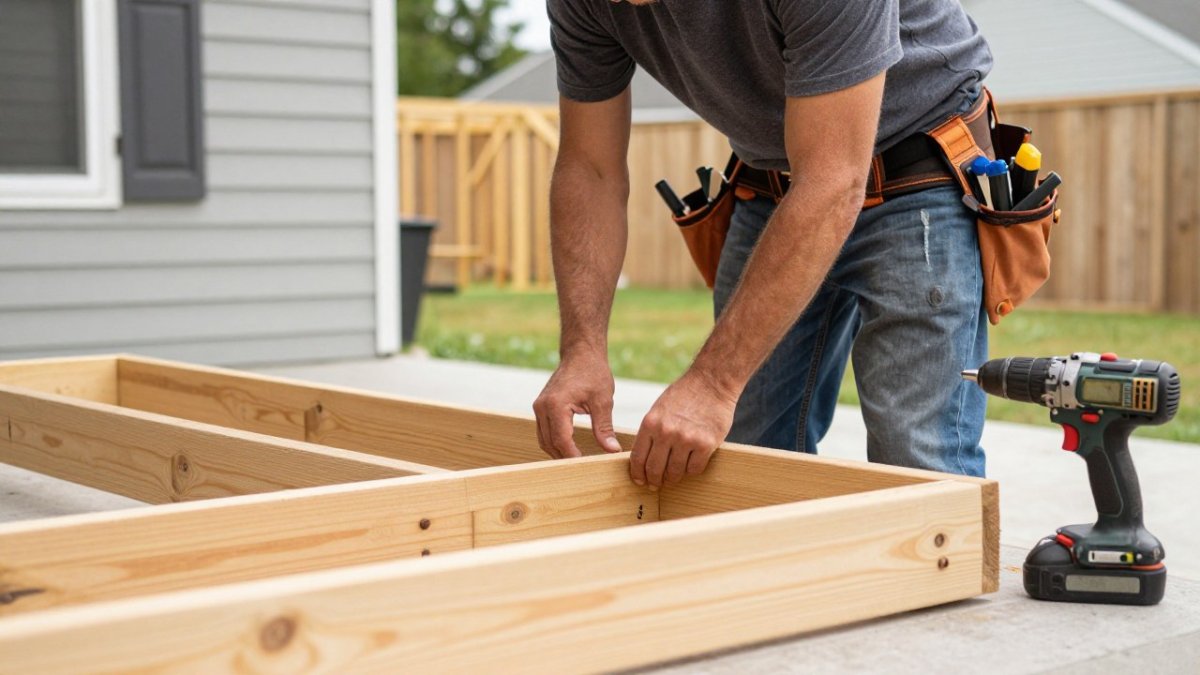
Cedar resists rot and insects better than most softwoods; Douglas fir brings stiffness for longer spans. For posts and beams, we stock 8×8 Western Red Cedar timbers when the client wants visible mass and clean grain. Better Homes & Gardens (2026) named a wooden kit its tested best overall at $1,699, which tells you the mid-market ceiling for a retail-grade wood kit.
Aluminum Pergola Kits: Louvered Systems and Low-Maintenance Installs
Aluminum pergola kits are often chosen for lower maintenance and adjustability, with louvered and motorized roof options available in the broader market.
Check corrosion resistance ratings and fastener compatibility before you spec any metal system against a steel ledger.
Pergola Kits Attached to House: Ledger Boards, Flashing, and Code Checks
Pergola kits attached to house carry the highest risk on any job because the connection is structural and the inspection is real. Ledger attachment, flashing, and lateral load paths decide whether the permit clears. Pull the local building department’s requirements before you order; attachment rules vary by jurisdiction and are enforced locally.
Specify connectors rated for the load. We stock structural hardware from Simpson Strong-Tie and OZCO, including a 5″ structural angle bracket for ledger connections. Watch out: skipping mechanical flashing at the ledger is the most common callback on attached builds.
Pergola Kit Cost: What Drives the Number and How to Estimate It
Pergola kit cost is driven by material, span, roof type, hardware grade, and freight, not by brand markup alone. A contractor estimate has to layer labor, freight, site prep, add-ons, and margin on top of the kit cost, and the kit cost itself should be quoted at trade pricing where the supplier offers it. For Pergola World’s current pricing, contact us for a quote.
The Contractor Estimating Model
Build the estimate in layers rather than quoting a single number:
- Kit cost at trade pricing. Ask for contractor or trade pricing, minimum order quantities, and whether pricing tiers improve on repeat orders. Not every supplier publishes trade pricing; confirm before you bid.
- Freight. Price freight before signing. Kit weight, beam length, liftgate, and residential delivery access all move the number, and freight is the line most often omitted from a bid.
- Site preparation. Slab, footings, or deck reinforcement are separate scopes. Footing depth and concrete volume depend on local code and the kit’s anchoring requirements.
- Labor. Estimate crew hours from the connector schedule and piece count, then multiply by your loaded labor rate. Attached builds and motorized roofs add hours.
- Add-ons. Motor and control wiring, lighting, fans, screens, and shade fabric are line items, not inclusions.
- Permit and engineering. Stamped plans, engineering letters, and permit fees vary by jurisdiction and should be quoted as a pass-through or a fixed allowance.
- Margin and contingency. Apply your standard margin and a contingency for freight damage, shortage, and inspection corrections.
What Moves the Number
| Cost Driver | What Moves the Number | Estimating Move |
|---|---|---|
| Material | Vinyl low, cedar mid, aluminum high | Quote per material tier |
| Span and size | Longer beams need bigger profiles | Confirm engineering first |
| Roof type | Fixed rafters vs. louvered or retractable | Add motor/control line |
| Hardware | Standard vs. structural-rated connectors | Never value-engineer here |
| Freight | Kit weight and delivery access | Price before signing |
| Site prep | Slab, footings, deck reinforcement | Separate scope line |
| Permit/engineering | Jurisdiction and stamped plans | Pass-through or allowance |
Trade Pricing, Minimums, and Repeat Orders
Contractor programs vary widely. Some suppliers offer tiered trade pricing, some require minimum order quantities, and some reserve dealer support and design consultations for repeat buyers. Ask three questions before you standardize on a supplier: what is the trade price versus retail, what is the minimum order, and what is the lead time on a repeat order. A supplier with strong dealer support and predictable repeat-order lead times is worth a small premium over the lowest sticker price, because schedule reliability protects margin on every job.
Margin Protection
Watch out: value-engineering structural connectors to protect margin is the fastest way to fail an inspection and eat the savings in a callback. Price the structural hardware as a fixed cost and protect margin in labor efficiency, freight planning, and add-on attachment rates instead. A kit that assembles in one day instead of two is worth more to the bottom line than a cheaper kit that adds a crew day.
Matching the Kit to the Job: A Contractor’s Decision Framework
Match the kit to the site before you match it to the budget. Kits are not always superior to custom-built structures; UDPWR’s comparison notes that non-level sites, unconventional dimensions, and specific architectural requirements may demand custom work.
Run this sequence:
- Confirm the site is level and the attachment condition is known.
- Check wind and snow requirements against the kit’s stamped specs.
- Verify permit and engineering documentation is available.
- Compare freight and crew time, not sticker price alone.
- Confirm replacement parts and long-term serviceability.
If dimensions are odd, read whether custom pergola kits work for odd dimensions before you commit. For a broader shortlist, cross-check our best pergola kits for a backyard oasis guide, and see how a pergola kits USA alternative stacks up before you judge suppliers.
Request a Contractor Quote from Pergola World
The gap between a profitable pergola job and a callback usually sits in the details you did not price: connectors, flashing, freight, and crew hours. Pergola World supplies custom-cut cedar and Douglas fir kits, pre-cut profile ends, pre-stained lumber options, and structural hardware from Simpson Strong-Tie and OZCO, backed by design consultations for professional crews.
Get a contractor quote from Pergola World and price the kit, the hardware, and the delivery access before the bid goes out.
Frequently Asked Questions
What should contractors look for in pergola kits?
Start with the structural details: bracket and fastener specifications, beam sizing, and published wind and snow load ratings. Then check whether components arrive pre-cut and pre-drilled, since that directly cuts crew hours on site. Confirm the manufacturer supplies engineering documentation for permit submissions, and ask about replacement parts availability. A kit that saves a day of labor but lacks documentation can cost you more in inspection delays than it saves.
Are wood or aluminum pergola kits better for contractors?
It depends on the client and the climate. Wood pergola kits, especially cedar and Douglas fir, suit clients who want a natural look and are willing to refinish periodically. Aluminum pergola kits resist rot and corrosion and need almost no upkeep, which fits coastal or high-moisture jobs. Aluminum louvered systems also allow an adjustable roof. Match the material to the client’s maintenance tolerance and the local weather exposure before you price the job.
Can pergola kits be customized for a specific project?
Many can, but the degree varies by supplier. Standard kits come in fixed sizes, while custom-cut suppliers produce lumber to your dimensions with pre-cut profile ends and pre-stained options. Custom sizing matters most on non-level sites, odd corners, and unusual spans where a stock kit would need on-site modification. Ask for a shop drawing before ordering so you can verify dimensions against the actual site conditions.
What permits or building-code requirements should contractors check before installing a pergola?
Check local zoning for setback and height limits, and confirm whether the structure counts as an accessory structure under your jurisdiction’s building code. Attached pergolas usually need a ledger connection detail and flashing plan that satisfies the inspector, and some areas require sealed engineering drawings. Get the permit requirements in writing before you order, because lead times on custom kits make late changes expensive.
Is it cheaper to build a pergola or buy a kit?
A kit usually wins on total installed cost for standard sizes because pre-cut components and included hardware cut labor hours. Custom-built structures can be cheaper only when the site demands non-standard dimensions or the design is unusual enough that kit modification wastes more time than fabricating from raw lumber. Compare the kit price plus estimated crew hours against lumber, hardware, and fabrication time for the same span.

