

Last Updated: November 12, 2026
Quick Summary
To hire a pergola installation contractor, build a shortlist of five to seven candidates, then verify each one’s license, general liability insurance, and workers’ compensation yourself before comparing written bids. Give every contractor the same written scope and compare quotes line by line on materials, labor, footings, permits, and warranty. Never pay a large cash deposit without a written contract.
- Define size, attachment type, surface, material, style, and a real budget range before calling anyone.
- Screen candidates by phone with four questions, including who pulls the building permit.
- Ask for three references from the past year, at least one a pergola rather than a deck.
- Compare at least three bids on the same scope; a cheap quote usually leaves out footings or permits.
- Tie payments to milestones and require written change orders before any work happens.
Table of Contents
- Step 1: Define the Project Before You Call Anyone
- Finding and Vetting a Local Pergola Installation Contractor
- Pergola Contractor Questions to Ask Before You Sign
- How to Read a Pergola Installation Quote Line by Line
- What Drives Pergola Installation Cost
- Pergola Installation on Concrete: What Changes
- Permits, Property Lines, Utilities, and HOA Approval
- Red Flags and Contract Terms That Protect Your Money
- Frequently Asked Questions
Step 1: Define the Project Before You Call Anyone
Hiring contractors for pergola installation starts with a decision most homeowners skip: defining the project before the first call. A clear scope is what separates three comparable bids from three bids you cannot compare at all.
Here is what to lock down first:
- Size and footprint: Measure the exact area, in feet and inches, where the pergola will stand.
- Attachment type: Freestanding or attached to the house. This changes the footing and permit picture.
- Surface: Patio slab, deck, or bare ground.
- Material: Cedar, Douglas fir, vinyl, or aluminum.
- Style: Fixed, louvered, or clear roofing panels.
- Budget range: A real number, not a vague ceiling.
Ground conditions matter more than most people expect. If your yard is not flat, read our guide on installing pergola kits on uneven ground before you brief anyone.
Finding and Vetting a Local Pergola Installation Contractor
The best pergola installation contractor is the one you can verify, not the one with the flashiest ad.
Step 1: Build a shortlist of five to seven candidates
Start with three sources and cross-check them against each other:
- Word of mouth: Neighbors with a pergola, a local lumberyard counter, and a landscape designer who does not install pergolas themselves.
- Licensed landscape contractors: Many general landscape contractors hold the right license and subcontract or self-perform the carpentry.
- Builder directories with verified reviews: Look for listings that show a license number and a physical business address, not just a phone number.
Aim for five to seven names. Fewer than that and you cannot compare; more than that and the verification work becomes unmanageable.
Step 2: Screen by phone before anyone visits
A ten-minute call filters most of the list. Ask four questions and listen for specifics:
- How many pergolas have you completed in the past twelve months?
- Do you self-perform the framing and footings, or subcontract them?
- Who pulls the building permit?
- Can you send a certificate of insurance before we meet?
A builder who mostly does decks may never have set a louvered pergola. That difference shows up in the details, so ask for photos of completed shade structures in your style, not just finished decks.
Step 3: Verify licensing and insurance yourself
Three checks are non-negotiable, and you do them, not the contractor:
- License: Ask for the state contractor license number and look it up in your state’s online license lookup. Confirm the license is active and covers the work being quoted.
- General liability insurance: Request a certificate of insurance and call the insurer to confirm the policy is current. Ask whether the certificate names you as an additional insured for the project.
- Workers’ compensation: Confirm the policy is active. If the contractor claims an exemption, ask for it in writing.
Skip any of these and you carry the risk. An uninsured worker injured on your patio is a problem you do not want.
Step 4: Check references the right way
Ask for three references from the past year, at least one of them a pergola rather than a deck. Call each one and ask:
- Did the crew show up when promised, and how many days did the job take?
- Were there change orders, and how were they priced?
- Did the contractor handle the permit and inspection without being chased?
- Would you hire them again, and what would you change?
Ask for the most recent project instead of the favorite one.
Step 5: Compare on equal footing
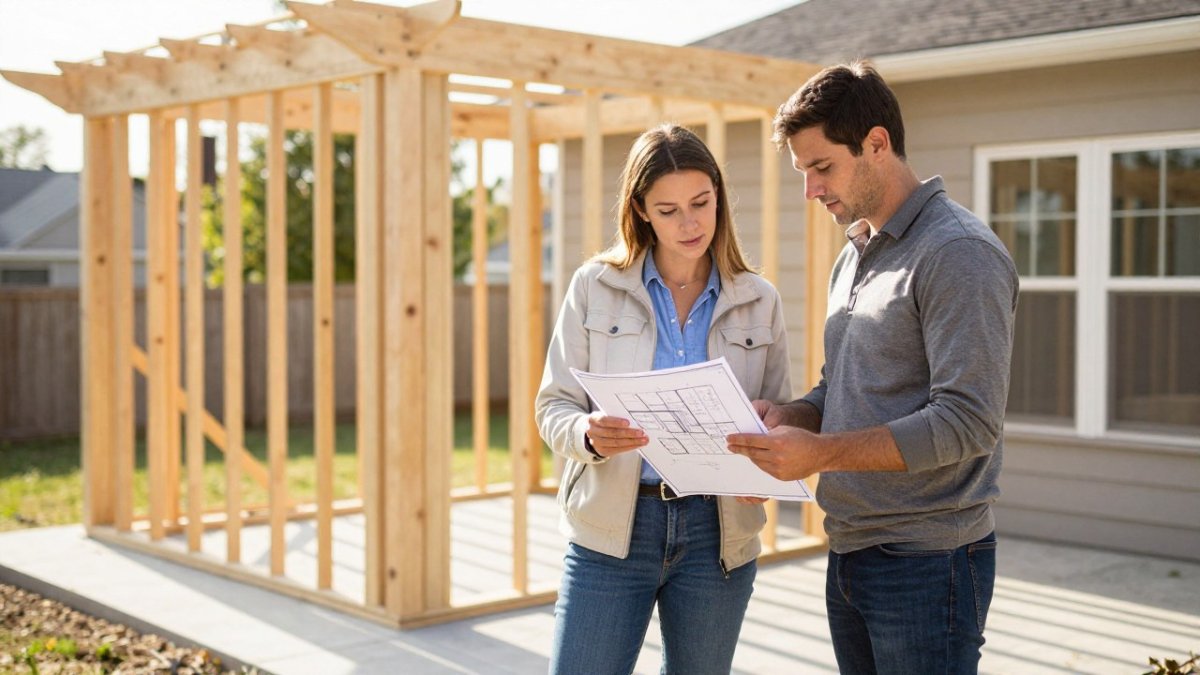
Give every shortlisted contractor the same written scope from Step 1 of this guide, the same site access, and the same deadline for bids. When bids come back, compare them line by line using the quote section below rather than on the bottom-line number alone.
Pergola Contractor Questions to Ask Before You Sign
The right pergola contractor questions do two things: they reveal how the builder thinks, and they expose gaps before money changes hands. Ask every candidate the same list, and write down the answers.
- How many pergolas have you built in the past year?
- Who pulls the building permit, you or me?
- How do you handle structural framing at the house attachment?
- What is your plan for leveling the frame, and how do you check it?
- Are stamped drawings included, or is that extra?
- What is the payment schedule, and how much is due at signing?
Frame leveling separates careful builders from fast ones. If you want to judge whether an answer is sound, our walkthrough on leveling a pergola frame shows what a proper process looks like.
How to Read a Pergola Installation Quote Line by Line
A pergola installation quote is a written estimate that breaks the job into materials, labor, permits, and site work. If a bid arrives as one lump sum, send it back.
Read for these line items:
| Quote Line | What to Check | Why It Matters |
|---|---|---|
| Materials | Species, grade, and hardware brand named | Vague “cedar” can mean low grade |
| Labor | Crew size and estimated days | One-day quotes on big builds are a warning |
| Footings | Depth and concrete specified | Shallow footings fail in frost |
| Permits | Who pulls it and the fee | Unpermitted work clouds resale |
| Removal | Old structure haul-away included | Often billed later as an extra |
| Warranty | Labor and material terms in writing | Verbal promises vanish |
Compare at least three bids on the same scope. A cheap quote usually leaves something out, and the missing piece is often the footing or the permit.
What Drives Pergola Installation Cost
Pergola installation cost depends on size, material, surface, and site access, not on the contractor’s mood.
Those ranges differ because they measure different things. One includes kit assembly, the other full construction.
Labor is typically the biggest swing factor. ZipRecruiter’s installer pay data lists average hourly pay for pergola installers at $27.14 as of November 2026.
Pricing depends on quantity, dates, and delivery. For current prices or a quote, visit the Pergola World website.
Pergola Installation on Concrete: What Changes
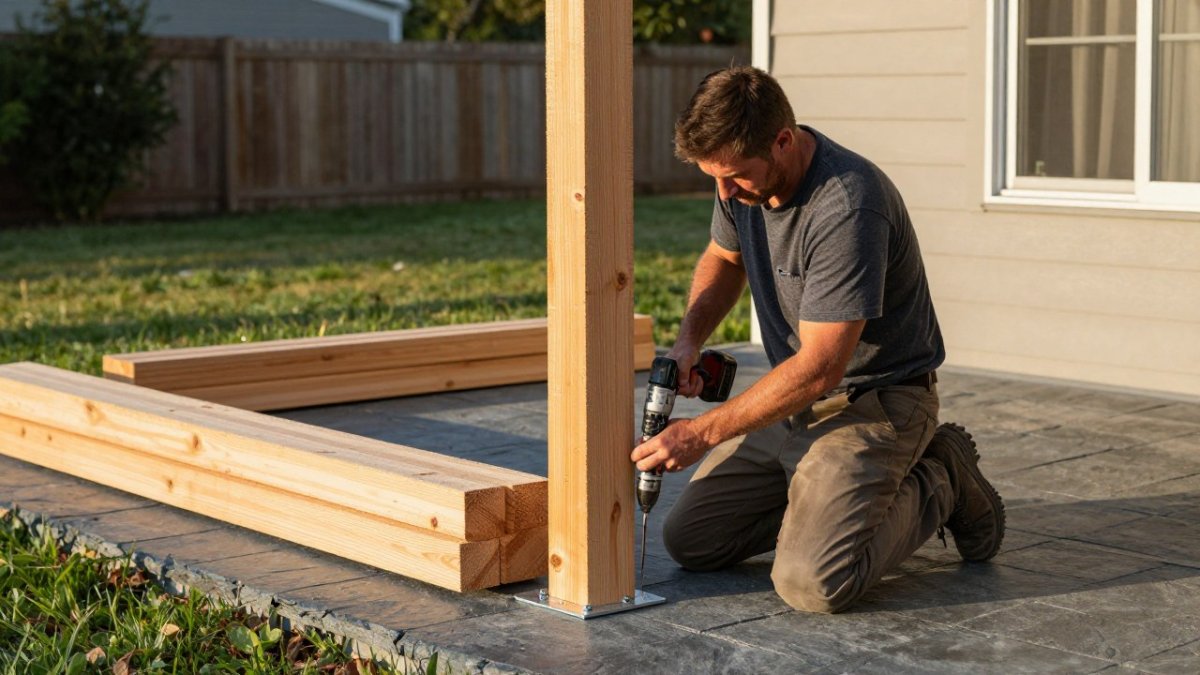
Concrete changes the anchoring, not the ambition. A slab means base plates and wedge anchors instead of buried posts, and it means you cannot move the pergola once the holes are drilled.
Three things to settle before drilling:
- Slab thickness: Four inches is common; thinner slabs need different anchors.
- Anchor type: Wedge anchors for solid slabs, sleeve anchors for block.
- Drainage: Water must run away from the posts, not pool against them.
Utilities run under slabs more often than people assume. For the full sequence, our guide on installing a pergola on concrete walks through all seven steps your contractor should follow.
Permits, Property Lines, Utilities, and HOA Approval
Permit requirements vary by city and by structure size, so check your local building department before signing anything. Many jurisdictions require a permit for pergolas, and the rules often depend on structure size and attachment. Ask the department directly rather than trusting a contractor’s guess.
Then handle three more checks:
- Property lines: Confirm setbacks with a survey, not a fence.
- Utilities: Call 811 so gas, water, and electric lines are marked.
- HOA approval: Get written sign-off before construction, not after.
Stamped drawings are often part of the permit packet. Ask whether the contractor supplies them or subcontracts them out.
Red Flags and Contract Terms That Protect Your Money
Watch out: a large cash deposit with no written contract is the single most common way homeowners lose money on this project. Never pay more than a modest deposit, and never pay in cash without a receipt.
Other red flags:
- Pressure to sign today for a discount
- No physical business address
- Refusal to show insurance certificates
- A quote far below every other bid
- No written warranty
- A request to pull the permit in your name so the contractor avoids inspection records
Contract terms that do the real work
A signed contract is your leverage. These terms matter more than the total price:
- Payment schedule tied to milestones: A milestone-based payment schedule ties each payment to a completed stage of work, with the balance due only after final inspection and cleanup. Never pay the full balance before the job passes inspection.
- Change orders in writing: Every change, a different beam species, an added privacy panel, a moved post, should be a written change order with a price and a schedule impact signed by both parties before the work happens. Verbal changes are how budgets break.
- Start and finish dates: Put both in the contract, along with a weather-delay clause that defines what counts as a delay and how it is documented.
- Warranty terms: Separate the workmanship warranty from the manufacturer’s material warranty. Get the length, what is covered, and who honors it in writing. Ask exactly how long the workmanship warranty lasts and what happens after that period.
- Lien waivers: Ask for a conditional lien waiver with each progress payment and a final unconditional waiver at completion. This protects you if the contractor fails to pay a supplier or subcontractor who could otherwise file a lien against your property.
- Cleanup and haul-away: State who removes packaging, spoil from footings, and any old structure, and by when.
What to do when something goes wrong
Document everything in writing, photos, dates, and emails, and withhold only the payment tied to the unfinished milestone, not the entire balance.
Material promises deserve scrutiny too. If a contractor guarantees cedar will never rot, read our guide on preventing pergola rot and rust first.
For a deeper look at the selection process, see our companion piece on hiring contractors for pergola assembly.
The hardest part of this project is not the building. It is trusting the person you hand the tools to.
Frequently Asked Questions
Do pergola installers need to be licensed and insured?
Requirements vary by state and county, so ask for the license number and verify it with your local licensing board. General liability insurance and workers’ compensation coverage matter just as much: without them, an injury or property damage on your job could land on your homeowner’s policy. Request a certificate of insurance naming you as the certificate holder and call the insurer to confirm the policy is active. A pergola installation contractor who hesitates on any of these requests is not worth the risk.
Should I buy a pergola kit before hiring an installer?
It can work well, but only if the kit is fully specified first. Custom-cut kits with pre-cut profile ends and pre-stained lumber can reduce assembly time. Confirm the kit’s dimensions, footing requirements, and hardware match what the contractor expects, and share the drawings before signing. If you buy first, get the contractor’s written approval of the kit specs so nobody blames the materials when something does not line up.
How many pergola installation quotes should I collect?
Three written quotes is the practical standard. Give every contractor the same scope, dimensions, and material list so the numbers are comparable. Look past the total: check whether permits, footings, haul-away, and hardware are included or listed as allowances. A quote that is thousands below the others usually leaves something out. Compare line items side by side and ask each contractor to explain any gap before you decide.
How do I compare pergola installation quotes fairly?
Build a simple grid with columns for labor, materials, permits, footings or concrete anchors, disposal, and warranty length. Ask each contractor to break the quote into those categories rather than one lump sum. Confirm the payment schedule, change-order process, and start and completion dates in writing. A slightly higher quote with permits, insurance certificates, and a written workmanship warranty included is usually the better deal than a low bid with open-ended extras.

