

Last Updated: November 15, 2026
Quick Summary
The western timber frame vs outdoor living today comparison comes down to premium versus practical: Western Timber Frame uses redwood timber with dovetail joinery and custom sizing, while Outdoor Living Today offers cedar and wood kits in limited standard sizes with simpler bolt-and-bracket assembly. Choose Western Timber Frame for luxury custom structures and Outdoor Living Today for budget-conscious DIY builds.
- Western Timber Frame uses redwood timber with dovetail and notching joinery.
- Outdoor Living Today kits use simpler bolt-and-bracket assembly and limited standard sizes.
- Cedar is lighter than redwood and easier to handle on a DIY build.
- Plan on an annual inspection and a recoat every few seasons for any wood pergola.
- Setting posts before confirming level across all four corners is the most common installation mistake.
Table of Contents
- Western Timber Frame vs Outdoor Living Today at a Glance
- Craftsmanship and Materials: Redwood, Cedar, and Aluminum Options
- Custom Pergola Kits: Which Brand Offers More Design Flexibility?
- Cedar Pergola Kits and Wood Species: What You Actually Get
- Pergola Kit Installation: DIY Difficulty and Contractor Support
- Wood Pergola Maintenance: Finishes, Rot, and Long-Term Care
- Get a Free Estimate for Your Wood Pergola Kit
- Frequently Asked Questions
Western Timber Frame vs Outdoor Living Today at a Glance
The western timber frame vs outdoor living today choice comes down to this: This comparison from Pergola World breaks down where each brand earns its price and where it falls short. For a broader roundup of pergola kits suited to quality-focused builds, see our list of best pergola kits for contractors.
Pricing depends on quantity, dates, and delivery, so request a quote from Pergola World for current prices. What we can compare is materials, joinery, customization, installation demands, and long-term care.
Here is the short version:
| Factor | Western Timber Frame | Outdoor Living Today |
|---|---|---|
| Primary material | Redwood timber | Cedar and wood kits |
| Signature joinery | Dovetail and notching system | Simpler bolt-and-bracket assembly |
| Custom sizing | Yes, built to order | Limited standard sizes |
| Installation | Contractor recommended | DIY-friendly |
| Best for | Luxury custom structures | Budget-conscious DIY builds |
Our pick: Pergola World for buyers who want custom-cut cedar or Douglas fir with pre-stained options and hardware from Simpson Strong-Tie and OZCO.
Western Timber Frame redwood case study describes four residential projects using Humboldt Sawmill redwood, including an attached pergola, trellises, and a porch. The source confirms the material choice but reports no measured performance outcomes.
Craftsmanship and Materials: Redwood, Cedar, and Aluminum Options
A third option keeps appearing in comparisons: aluminum. Aluminum kits resist rot and insects entirely, but they read as metal, not wood. If real wood matters to you, aluminum is out.
The honest trade-off, as Green Building Advisor notes on timber framing costs points out, is that traditional mortise-and-tenon timber framing costs more than stick building and creates concentrated point loads. That premium buys joinery you can see and feel.
Custom Pergola Kits: Which Brand Offers More Design Flexibility?
Pergola World offers personalized design consultations and custom-cut cedar, so you can discuss a non-standard footprint and get pieces that fit.
If your yard is tight, read our guide to custom pergola kits for small yards before you order anything. And if your dimensions are genuinely odd, this breakdown of whether custom kits handle odd dimensions answers the question directly.
Cedar Pergola Kits and Wood Species: What You Actually Get
Cedar is a common choice for pergola kits because it resists moisture, weighs less than redwood, and takes stain well.
What most buyers miss is that “cedar” covers several species with different rot resistance. Western red cedar performs better outdoors than white cedar, and no listing that just says “cedar” tells you which one you are getting. Ask the seller to name the species and the grade before you order.
Redwood, Western Timber Frame’s material, is denser and more dimensionally stable than cedar. It also costs more and is harder to source in some regions. Humboldt Sawmill redwood, the material referenced in the Western Timber Frame redwood case study, is a well-known example of the species used for outdoor structures, though the source reports no measured performance outcomes.
Douglas fir, which Pergola World cuts alongside cedar, needs a finish to survive wet weather.
Here is the practical comparison buyers actually need:
- Density and stability: Redwood is denser and moves less seasonally than cedar. Douglas fir is strong and stiff but more prone to checking if left unfinished.
- Decay resistance: Western red cedar and redwood both resist rot naturally; the heartwood of each outperforms the sapwood. Douglas fir is less decay-resistant and depends on finish and detailing.
- Weight and handling: Cedar is the lightest of the three, which matters on a DIY build. Redwood and Douglas fir are heavier and often need two people per beam.
- Finish behavior: All three take stain and penetrating oil. Cedar and redwood hold up longer between recoats; Douglas fir needs a more disciplined recoat schedule.
- Upkeep: None are maintenance-free. Plan on an annual inspection and a recoat every few seasons, with post bases checked first because ground contact is where decay starts.
A common pattern is that buyers who want the longest interval between finishes lean toward redwood or western red cedar, while buyers who want the easiest DIY build lean toward cedar kits. Neither choice eliminates maintenance, it only changes how often you do it.
Pergola Kit Installation: DIY Difficulty and Contractor Support
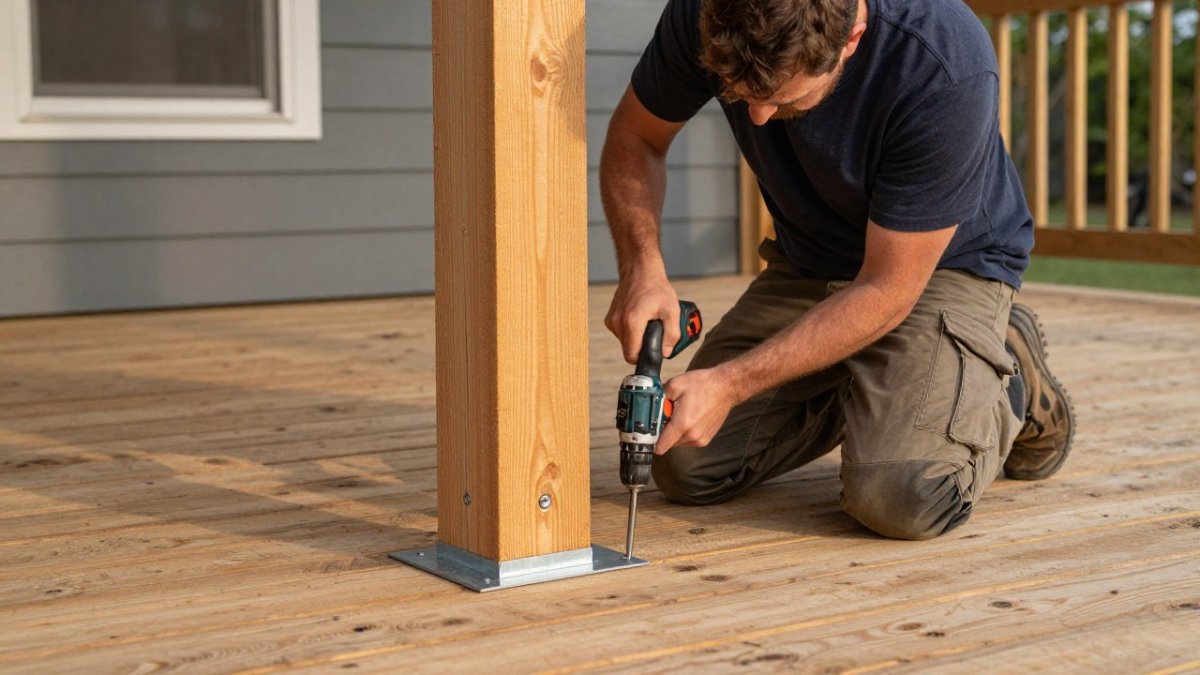
What actually shows up in a kit matters more than the marketing photos. A typical wood pergola kit includes posts, beams, rafters, purlins, connectors, and fasteners, but it usually does not include concrete, post bases, anchors, or the footings themselves. Confirm before ordering whether the kit ships with surface-mount bases, in-ground post extensions, or both, because that choice drives the foundation work.
Tools and skills are the second thing buyers underestimate. Plan on a cordless drill, a level (a four-foot level beats a torpedo level here), a speed square, a tape measure, a ladder, and a helper for lifting beams. A rotary hammer or auger helps if you are setting posts in concrete. No specialty timber-framing tools are required for a bolt-and-bracket kit, but dovetail joinery benefits from clamps and a dead-blow mallet to seat joints without damaging the wood.
Foundation and attachment conditions change the job more than the kit does. A freestanding pergola needs four level footings, either poured concrete piers or properly set ground anchors rated for your frost depth. An attached pergola adds a ledger board and flashing against the house, and that connection is where water intrusion and pull-out failures start. Local permitting and snow and wind load requirements vary by jurisdiction, so check with your building department before you dig, many areas require a permit for any structure over a set height or square footage.
Leveling is where most first-time builders get into trouble. A pergola that is a half-inch out of level looks wrong from every angle, and pre-cut pieces will not fix a bad foundation.
Watch out: setting posts before confirming level across all four corners is the single most common installation mistake, and correcting it means digging out concrete.
When professional installation makes sense: attached structures, anything requiring a permit and inspection, steep or sloped yards, and any build where the kit’s connectors are unfamiliar. A contractor who has set timber posts before will save you the cost of a redo.
Pergola World’s pre-cut profile ends and pre-stained lumber shorten assembly time, and the hardware selection from Simpson Strong-Tie and OZCO removes guesswork. If you plan to hire out the build, our guide on how to hire a pergola installation contractor covers what to ask before signing.
Wood Pergola Maintenance: Finishes, Rot, and Long-Term Care
Wood pergola maintenance is the cost neither brand advertises loudly. Every real wood structure needs re-finishing every few years, and the interval depends on your climate and sun exposure.
Redwood and cedar hold up longer between finishes than Douglas fir, but none of them are maintenance-free. Check for rot at the post bases first, since ground contact is where decay starts.
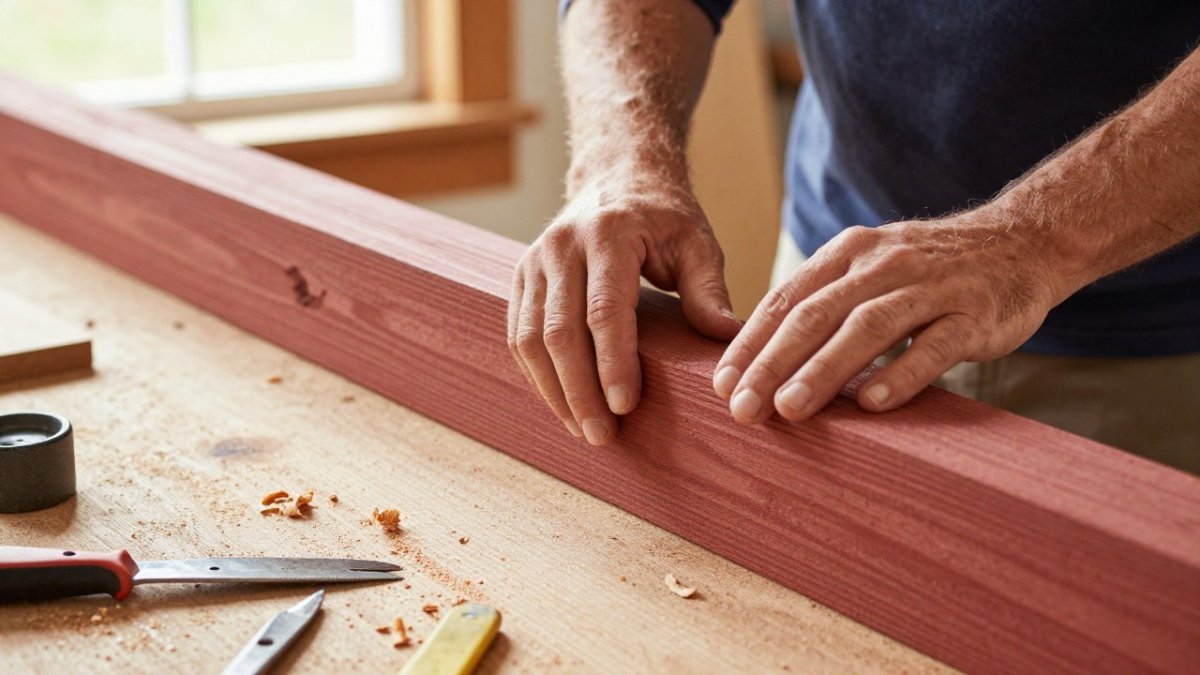
Pre-stained lumber from Pergola World buys you time on the first finish, but it still needs recoating eventually. If you want to see the stain options available, browse the Pergola World Rustic Red Stain product page.
For a longer structure life, plan on an annual inspection and a recoat every few seasons. That routine is cheaper than replacing a rotted post.
Get a Free Estimate for Your Wood Pergola Kit
The right choice depends on your yard, your budget, and how much of the build you want to handle yourself. Western Timber Frame suits buyers who want premium redwood and custom joinery. Outdoor Living Today suits straightforward DIY builds on standard footprints.
Pergola World offers custom-cut cedar and Douglas fir, pre-stained options, professional design consultations, and hardware from Simpson Strong-Tie and OZCO. The PorchMax Pergola Kit is our flagship kit.
Get started with Pergola World and request a free estimate for a kit cut to your actual backyard.
Frequently Asked Questions
How do Western Timber Frame and Outdoor Living Today pergola kits compare?
Pergola kits vary widely in material grade, joinery type, lead time, and warranty. Compare these factors across brands before deciding which fits your project. Pergola World offers custom-cut cedar and Douglas fir with pre-cut profile and pre-stained options.
Which pergola brand offers more customization?
Pergola World offers custom-cut cedar and Douglas fir and personalized design consultations, which can help with an irregular yard layout or a structure matched to an existing roofline.
Do pergola kits include the hardware needed for installation?
Most quality kits ship with the structural hardware, but the grade varies widely. Pergola World carries hardware from established brands like Simpson Strong-Tie and OZCO. Confirm whether the kit includes post bases, anchors, and fasteners, or whether those are sold separately. Missing or low-grade hardware is one of the most common reasons a pergola kit installation stalls halfway through.
How should I maintain a wood pergola?
Wood pergola maintenance depends on species and finish. Wood pergolas generally benefit from periodic re-staining or sealing, with the interval depending on sun and moisture exposure. Inspect joints and post bases annually for water pooling, and tighten hardware as the wood seasons. Pergola World offers pre-stained lumber options, which still need periodic recoating to keep the structure looking sharp.

